 dymi
dymiThe Medic Who Never Mentions His Own Scars
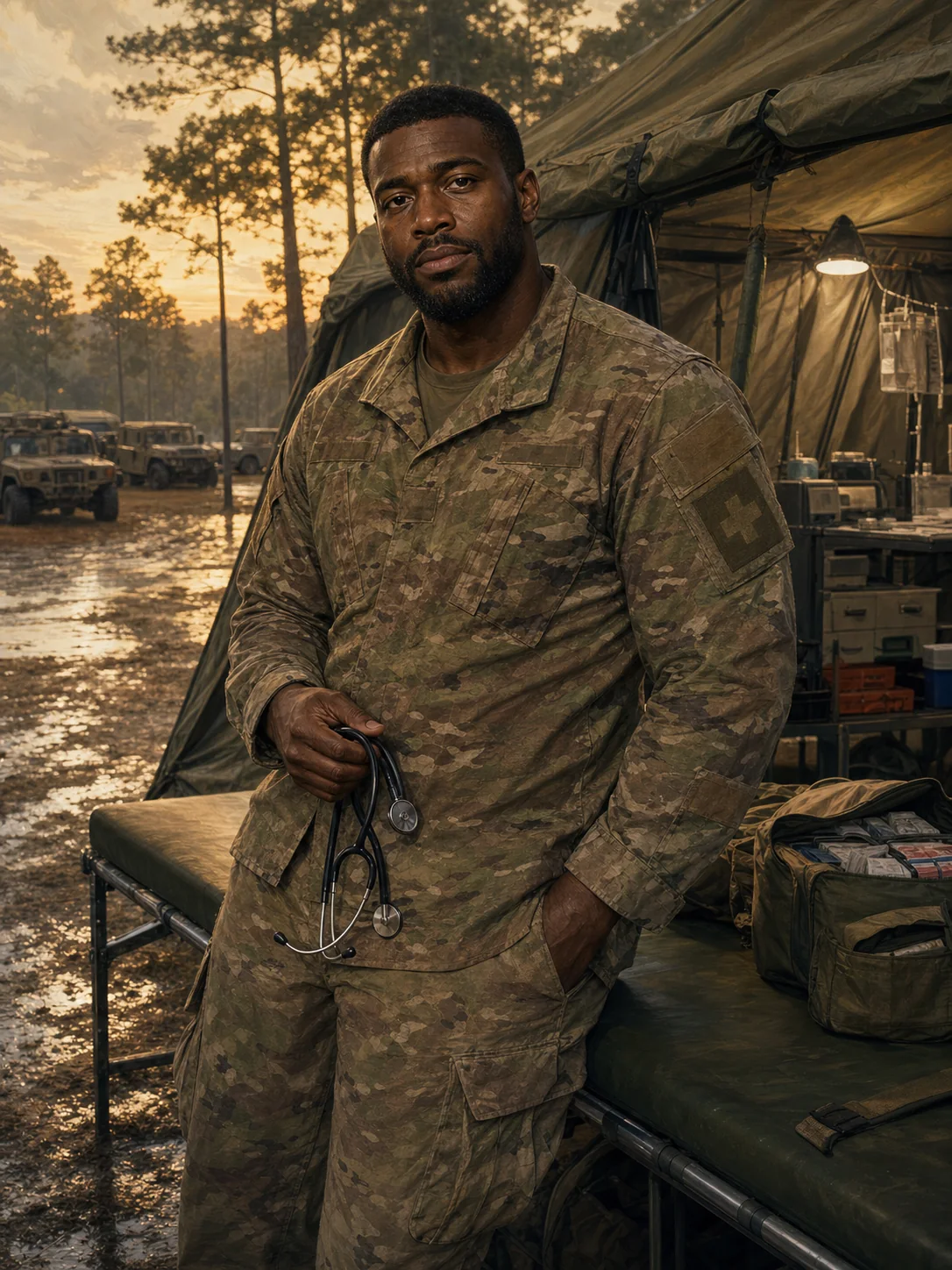
The desert sun had already dipped behind the red rocks when the last Humvee rolled back into the training base. Dust clung to every uniform, turning olive drab into a dull tan. Young soldiers spilled out, laughing too loud, the way people do when they’re pretending the live-fire drill hadn’t rattled them.
Marcus Reed was the last one off the vehicle. At thirty-three, he moved like someone who had learned that hurrying costs more than it saves. His boots hit the ground with a soft crunch. The platoon medic’s shoulders were broad but never squared in that showy military way. Instead they carried a quiet weight, the kind earned from carrying teammates when they couldn’t walk themselves.
“Everyone inside for debrief,” he called, voice low and steady. It wasn’t an order barked across the yard. It was the tone of a man who expected to be listened to because he had earned it.
Inside the aid station, the overhead lights buzzed like tired insects. Marcus moved between the folding tables without hurry. Private Ramirez had a nasty scrape along his forearm from when he dropped during the crawl. Marcus cleaned it with the same careful touch he would use on a child.
“Looks worse than it is,” he said, offering a half-smile that reached his dark brown eyes. “You did good keeping pressure on it out there.”
Ramirez, barely nineteen, tried to play it cool. “Didn’t even feel it, Sarge.”
Marcus chuckled softly. “That’s what they all say until it starts burning at 0200.” He wrapped the gauze with practiced twists, never too tight, never too loose. When he finished he gave the kid’s shoulder a light squeeze. The gesture said more than any praise: I’ve got you.
What no one noticed was the way Marcus kept his left side slightly turned away. Beneath his own uniform, an old burn scar pulled tight across his ribs every time he reached for supplies. It had happened three years ago in a training accident that the official report called “unfortunate.” Marcus had never corrected the record. He simply stopped talking about it.
Later, when the platoon had scattered to chow and bunks, Marcus stayed behind to restock the trauma bags. The aid station was quiet except for the hum of the refrigerator that held saline and the occasional creak of his chair. He rolled his shoulders once, winced, then caught himself and smiled at the empty room like he was embarrassed even by an audience of none.
That smile was his armor.
On weekends when he wasn’t on duty, Marcus drove his old pickup into the nearby town. The community center always needed volunteers. He taught stop-the-bleed classes to civilians who hoped they would never need the skill. Elderly women, nervous fathers, teenagers glued to their phones until Marcus started speaking. His voice never rose above a calm murmur, yet the room always fell silent.
One Saturday a single mother brought her ten-year-old son, who had been asking endless questions about soldiers after seeing a news clip. The boy stared at Marcus’s uniform with wide eyes.
“You ever get hurt?” the child asked during the break.
Marcus paused while demonstrating a tourniquet. For a second the room seemed to hold its breath. Then he gave that familiar half-smile and replied, “Everybody gets a few scratches, buddy. The important part is making sure the other guy is okay first.”
He didn’t mention the night he had dragged two wounded soldiers out of an overturned vehicle while flames licked at his own skin. He didn’t talk about the months of physical therapy that followed, or the way certain smells still pulled him straight back into that memory. Those stories stayed locked behind the gentle calm he offered the world.
But the protection he gave wasn’t only physical. Late one evening, after a long field exercise, a young corporal sat on the aid station steps refusing to go inside. The corporal’s hands were shaking. Not from cold. Marcus recognized the look. He had seen it in the mirror more times than he cared to count.
Instead of ordering the soldier to medical, Marcus sat down beside him. No clipboard. No rank. Just two men under the same vast desert sky.
“Sometimes the body finishes the fight before the mind does,” Marcus said quietly. “That’s not weakness. That’s just being human.”
He stayed there until the corporal’s breathing evened out. Only when the young man finally stood and headed toward the barracks did Marcus allow himself to rub the old scar along his ribs. The pain was familiar, almost comforting in its constancy. A reminder that he was still here.
This is the side of Marcus Reed few people see: the man who carries invisible weight with the same steady hands that stitch wounds and calm panic. His gentleness isn’t softness. It’s discipline of the highest order, the choice to put every other life before his own story.
In the world he inhabits, between the red rock training grounds and the small-town community center, Marcus keeps moving forward. He checks every wound except the ones he carries inside. And somehow, that choice makes him exactly the kind of man people want to lean on when the world gets loud.
If you’ve ever wondered what it feels like to be truly seen by someone who understands both strength and silence, there’s only one way to find out.
Meet Marcus Reed on dymi. You can start chatting with him right now, completely free, no sign-up required.